

Ask ten home gym owners where they prefer to train, and you'll probably get ten different answers.
Some swear by their garage gym. They love rolling up the garage door, letting fresh air in, and starting the day with a workout before the rest of the neighborhood wakes up. Others wouldn't trade their basement gym for anything. For them, the appeal is simple: no weather concerns, no distractions, and a space that feels like a private training studio.
If you're planning to build a home gym around a cable pulley system, the decision becomes even more interesting.
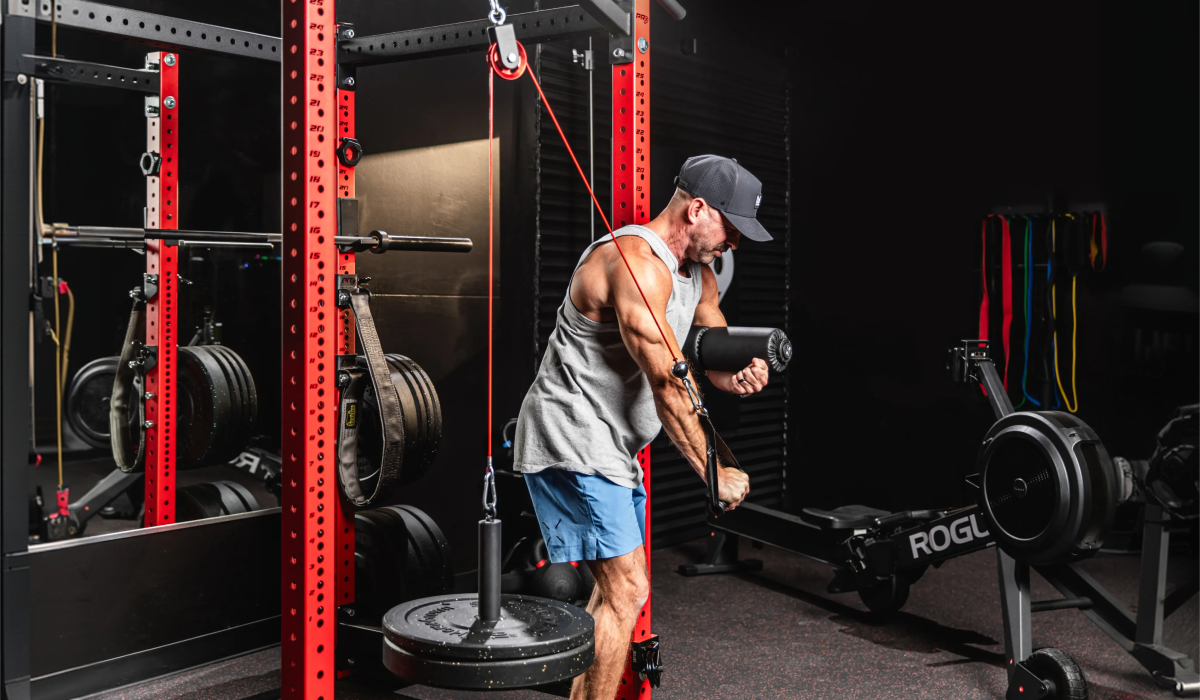
Unlike bulky commercial machines that demand an entire room, cable pulley systems are designed to make the most of available space. They offer versatility, smooth movement, and the ability to perform dozens of exercises without turning your home into a fitness warehouse.
That raises an important question: when it comes to garage gym vs basement gym, which environment helps you get the most out of your setup?
The answer isn't as straightforward as many online comparisons make it seem.
It Starts With How You Actually Like to Train
A lot of people begin their home gym journey by focusing on equipment.
They compare racks, benches, bars, and cable systems for hours. Then they choose a location almost as an afterthought.
In reality, the location often has a bigger impact on long-term success than the equipment itself.
Think about your daily habits.
Do you enjoy open spaces and natural light? Do you like the feeling of walking into a dedicated training area that feels separate from the house?
Or do you prefer a quieter environment where the temperature stays comfortable year-round and you can focus without interruption?
The best gym isn't necessarily the biggest one. It's the one that makes you want to train consistently.
That's why many homeowners eventually discover that the debate isn't really about square footage. It's about lifestyle.
The Garage Gym Experience
There is something undeniably appealing about a garage gym.
It feels purposeful.
When you step into the space, you're stepping away from work emails, household chores, and television screens. The environment itself creates a mental shift.
Many home gym owners compare it to walking into a small private training facility.
For cable pulley users, garages often provide another advantage: flexibility.
Because garages are usually designed as open spaces, there is often more freedom when positioning equipment. Whether you're attaching a pulley system to a rack, installing storage, or creating room for movement, the layout tends to be forgiving.
The higher ceilings found in many garages can also be helpful for exercises that require a greater range of motion.
Of course, garage gyms aren't perfect.
A summer workout can feel very different from a winter workout. Depending on where you live, temperature swings may influence how often you train and how comfortable those sessions feel.
Some people embrace that challenge.
Others quickly realize that sweating through extreme heat isn't quite as motivating as they imagined.
The Basement Gym Experience
Basement gyms attract a different type of home gym owner.
Instead of openness, they offer control.
The temperature is usually more stable. The environment feels quieter. Outside weather becomes almost irrelevant.
There is something comforting about knowing your workout space will feel nearly identical whether it's raining, snowing, or blazing hot outside.
For people who value routine, this consistency can be a huge advantage.
A cable pulley workout doesn't suddenly become less appealing because the weather changed.
Basements can also create a more polished atmosphere. Some homeowners add mirrors, speakers, televisions, or finished flooring that makes the room feel like a professional studio rather than a storage area with weights.
The challenge often comes down to space planning.
Support beams, lower ceilings, and unusual room layouts can require more creativity than an open garage. That doesn't make a basement gym worse, it simply means thoughtful design becomes more important.
Looking Beyond the Obvious Differences
Many articles attempt to answer What are the key differences between a garage gym and a basement gym setup? by creating simple comparison charts.
The reality is much more personal.
Imagine two people purchasing the exact same cable pulley system.
One installs it in a spacious garage with plenty of room to move around. The other places it in a finished basement with climate control and sound insulation.
Neither setup is objectively better.
What matters is how each person feels when they walk into the space.
Motivation is difficult to measure, but it plays a massive role in long-term fitness success.
If one environment makes you excited to train while the other feels inconvenient, the decision becomes surprisingly easy.
Why Cable Pulley Systems Change the Conversation
Traditional gym equipment often forces homeowners to make difficult compromises.
A large machine might deliver excellent workouts but consume valuable floor space.
Cable pulley systems are different.
They offer versatility without demanding an entire room.
A single setup can support back exercises, arm training, shoulder work, core movements, and countless accessory exercises. For families sharing a home gym, that versatility becomes even more valuable because different users can perform completely different workouts using the same equipment.
This flexibility is one reason modern home gym owners are becoming more selective about space.
Instead of asking, "How much equipment can I fit in this room?" they're asking, "How efficiently can this room support my training?"
That shift in thinking changes everything.
Making Every Square Foot Count
One of the biggest misconceptions about home gyms is that more space automatically creates a better training environment.
That's not always true.
Some of the most impressive home gyms occupy surprisingly small areas because they're designed intelligently.
When considering How to optimize space in a garage gym compared to a basement gym, the goal should never be filling every available corner.
Instead, focus on movement.
Can you perform exercises comfortably?
Can you transition between workouts without constantly moving equipment?
Can multiple people use the space without feeling cramped?
Cable pulley systems work exceptionally well because they encourage this mindset. Rather than requiring several dedicated machines, they consolidate multiple training options into a single footprint.
The result is a cleaner, more functional gym that feels larger than it actually is.
The Renovation Question Nobody Talks About
Most people get excited about equipment purchases.
Very few get excited about insulation, lighting, flooring, or moisture control.
Unfortunately, these details often determine how enjoyable a home gym becomes.
Before investing in equipment, it's worth evaluating the condition of the space itself.
This is where the Cost comparison of renovation services for a garage versus a basement fitness space. becomes relevant.
A garage may require upgrades to improve comfort throughout the year. A basement may need moisture management or electrical improvements before equipment can be installed confidently.
The actual numbers vary dramatically depending on the property.
That's why there is no universal answer regarding which option is cheaper.
The smartest approach is evaluating the space you already have rather than assuming one location is automatically less expensive than the other.
Don't Overlook the Floor Beneath Your Feet
Ask experienced home gym owners what they wish they had done sooner, and many will mention flooring.
It's easy to become obsessed with equipment while overlooking the surface you're training on every day.
Yet flooring affects comfort, safety, noise levels, and equipment protection.
For homeowners researching the Best durable flooring solutions for a home gym on a concrete slab., rubber flooring remains one of the most practical choices available.
It absorbs impact, protects equipment, and creates a more comfortable training environment.
This becomes especially important when cable pulley workouts are combined with free weights, benches, and other strength equipment.
A quality floor doesn't simply protect your investment, it improves the overall training experience.
Building a Gym You'll Actually Use
One mistake many first-time gym builders make is trying to recreate a commercial gym.
Commercial gyms serve hundreds or thousands of people.
Your home gym only needs to serve you.
That's why selecting equipment should focus on versatility rather than quantity.
When comparing the Best equipment packages for garage gyms vs basement gyms, a compact but effective setup often outperforms a room full of specialized machines.
A rack, adjustable bench, barbell, weights, and cable pulley system can support an enormous variety of workouts without overwhelming the space.
The beauty of this approach is simplicity.
You spend less time organizing equipment and more time training.
The Real Winner
At some point, every home gym owner realizes something important.
The perfect gym doesn't exist.
Every setup involves trade-offs.
A garage may provide more freedom and openness. A basement may offer greater comfort and consistency.
Neither option guarantees better results.
What creates results is showing up.
That's why discussions about Garage gym vs basement gym pros and cons sometimes miss the bigger picture.
The best location is the one that removes excuses.
The one that fits naturally into your routine.
The one that makes it easy to walk in, grab the cable handles, and start moving.
Because at the end of the day, your gym isn't competing with other gyms.
It's competing with every reason you might skip a workout.
Choose the space that makes training feel effortless, and you'll build something far more valuable than a home gym.
You'll build a habit that lasts.

Share:
Push Pull Legs with a Cable Pulley System: The Ultimate PPL Split for Home Gyms
How Much Protein Do You Actually Need When Training with Cable Machines?