

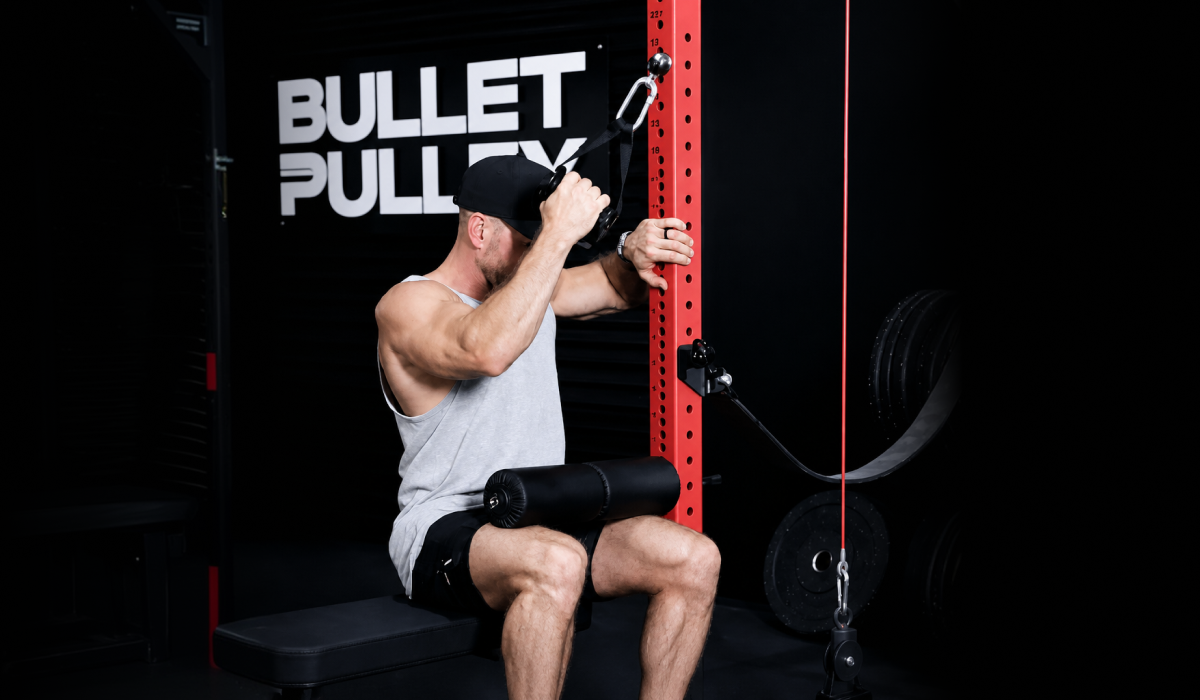
Let's be honest for a second. That lat pulldown machine at your commercial gym is great until you actually try to own one. It's massive, it's expensive, and unless you've got a spare warehouse attached to your bedroom, it's not fitting into a home setup any time soon. So if you've been staring at your power rack wondering how on earth you're supposed to hit your lats without that big seated station, you're in exactly the right place.
The good news? Your power rack is secretly one of the most versatile pieces of equipment you can own. With a bit of creativity (and maybe one clever attachment), you can build a wide back without ever setting foot in a crowded gym. Let's break it all down.
Can You Do Lat Pulldowns on a Power Rack?
Short answer: yes, absolutely. Longer answer: it depends on what you've got bolted onto that rack.
A bare power rack on its own doesn't magically pull your arms overhead against resistance. What it does give you is a rock-solid, vertical frame with a high anchor point, and that's basically the entire foundation of any pulling movement. The overhead crossbar becomes your pull-up station. The uprights become mounting points. And the top of the rack becomes the perfect height for cable-based pulls if you add a pulley into the mix.
This is where a lot of home lifters get stuck. They assume that recreating a pulldown means buying a whole separate machine. It doesn't. There are plenty of lat pulldown alternatives that live entirely within the footprint of a rack you already own, and some of them arguably train your back better than the seated machine ever did. The key is understanding that the machine was never magic. The movement pattern was. Once you nail the pattern, the tool becomes flexible.
So no, you don't need to squeeze a 200-pound station into your garage. You just need to think about your rack a little differently.
Why Use a Power Rack Instead of a Lat Pulldown Machine?
Here's the thing nobody tells you when you're first building a home gym: single-purpose machines are the enemy of small spaces.
A dedicated pulldown station does exactly one job. It sits there taking up square footage twenty-three hours a day so you can use it for one exercise. Compare that to a power rack home gym, which can handle squats, presses, pull-ups, rows, rack pulls, and about a dozen accessory movements from the same steel frame. When floor space is the currency you're spending, versatility wins every single time.
There's a cost angle too. A quality pulldown machine can run you well over a thousand dollars, and that's before you've bought anything else. Meanwhile, your rack is already there, already paid for, already earning its keep. Adding a smart alternative for lat pulldown machine setups to a rack you own is a fraction of the cost of buying a whole new station, and you keep your room from turning into a cramped equipment graveyard.
And honestly? Rack-based training just feels more connected. You're standing, bracing, controlling your own body position rather than being locked into a fixed seat with a thigh pad pinning you down. A lot of lifters find their back development actually improves once they escape the rigid path of the machine and start working through a fuller range with cables and bodyweight. Freedom of movement is underrated.
Best Lat Pulldown Alternatives for a Power Rack
Alright, let's get into the actual exercises. These are the movements that'll build the wide, strong back you're after, all doable within your rack. Mix and match based on what gear you've got.
Pull-Ups and Chin-Ups
Start with the obvious one. If your rack has a pull-up bar (most do), you've already got the single most effective back builder in existence. Pull-ups hammer your lats through a massive range of motion, and they're endlessly scalable. Too easy? Add a weight belt. Too hard? Loop a resistance band over the bar for assistance. Wide grip torches the outer back, close grip brings in more mid-back and biceps, and neutral grip is easy on cranky shoulders. This is your bread and butter.
Band-Assisted Pulldowns
No cable setup yet? Anchor a resistance band over your rack's top crossbar, grab both ends, kneel down, and pull. The band mimics the pulldown motion surprisingly well, and because band tension increases as you pull, you get a killer contraction at the bottom. It's the simplest lat pulldown home alternative going, costs almost nothing, and travels anywhere. Perfect for beginners or anyone easing into back training.
Inverted Rows
Set a barbell in the rack at hip height, slide underneath, and row your chest up to the bar. This is a horizontal pull rather than vertical, so it targets your mid-back and rear delts more than your lats, but it's an essential companion movement for a balanced, thick back. Adjust the bar height to make it easier or harder. Feet forward makes it brutal; feet back makes it beginner-friendly.
Straight-Arm Pulldowns
If you've got a cable attachment on your rack, this is a fantastic isolation move. Keep your arms mostly straight and drive the bar down in an arc toward your thighs, feeling your lats do all the work. It's one of the best alternative exercises for lat pulldown options because it isolates the lats without your biceps stealing the show. Great as a finisher.
Cable Lat Pulldowns With a Pulley Attachment
Here's where things get genuinely exciting. If you mount a pulley system to your rack, you can recreate the classic seated pulldown almost exactly, minus the giant machine. Attach a pulley high on your rack, clip on a bar or handle, load your resistance, and pull down while kneeling or seated on a bench.
This is where a system like the Bullet Pulley completely changes the game. It's a compact, aircraft-grade aluminum pulley kit that mounts directly onto your existing power rack and turns it into a full cable station. Because it clamps onto the rack you already have, it reclaims all that floor space a standalone machine would've eaten. One kit unlocks lat pulldowns, seated rows, straight-arm pulldowns, and a whole lot more, so you're not buying separate equipment for every movement. For anyone serious about back training at home without the bulk, it's a seriously smart upgrade.
Meadows Rows and Landmine Rows
Wedge one end of a barbell into a corner of your rack (or a landmine attachment), load the other end, and row single-arm. These build serious back thickness and let you go heavy while training each side independently. Fantastic for ironing out muscle imbalances between your left and right lats.
Rotate through these across your training week and you'll cover every angle your back needs. Vertical pulls, horizontal pulls, and isolation work is the full recipe.
What Exercises Can You Do on a Power Rack?
So we've covered your back in detail, but let's zoom out, because this is where owning a rack really pays off. What exercises can you do on a power rack? Honestly, the better question is what can't you do.
For your lower body, you've got squats in every variation, rack pulls, good mornings, lunges, and calf raises. For your chest and shoulders, bench press (with a bench slid in), overhead press, and floor presses. Your back gets everything we just talked about plus barbell rows and rack pulls. Add in a pulley setup and suddenly you've got cable flyes, tricep pushdowns, bicep curls, face pulls, and cable crunches for your core. That single steel frame quietly replaces an entire gym floor's worth of machines.
This is exactly why the smartest home gym builds start with a solid rack and then expand outward with attachments rather than buying isolated machines. A cable cross over attachment for power rack setups, for instance, unlocks an entire category of chest and arm movements you'd otherwise need a dedicated crossover station for. The Bullet Pulley's dual pulley kit does precisely this, giving you crossover-style flyes and pulls on the frame you already own. You keep your space open, your wallet happier, and your training options wide open.
The takeaway here is simple. Don't think of your power rack as just a squat cage. Think of it as the beating heart of your entire home gym, a platform you build around. Bolt on the right attachments and it grows with you, movement by movement, without ever demanding another square foot of your room.
You don't need a wall of machines to build a serious physique. You need one great rack, a bit of imagination, and the willingness to pull. Now go build that back.
Share:
What Cable Length Do You Need for a Power Rack Pulley Setup?
Cable Shoulder Workout: Exercises to Build Bigger Delts at Home