

So you've finally decided to turn your power rack into a full-blown cable machine. Smart move. But before you start threading cables and bolting on hardware, there's one question that trips up almost everyone: how long should the cable actually be?
It sounds like a small detail. It isn't. Get the length wrong and your lat pulldowns feel cramped, your low rows run out of travel halfway through the rep, and you're left wondering why your shiny new power rack pulley setup feels more like a puzzle than a gym. Get it right, and every movement flows like you're standing in a commercial gym.
Let's break down exactly what you need, exercise by exercise, so you can build a setup that actually works for your body and your rack.
How Power Rack Height Affects Cable Length
Here's the first thing nobody tells you: your cable length is tied directly to how tall your rack is.
Most power racks stand somewhere between 82 and 93 inches tall. That vertical space is your playground, and it's also your constraint. A taller rack gives the weight stack (or plate carriage) more room to travel up and down, which means you need more cable to cover that distance. A shorter rack needs less.
Think of it like this: the cable has to run from your handle, up over the top pulley, and all the way down to wherever your weight is anchored. The taller the rack, the longer that journey. If your power rack cable pulley doesn't have enough cable to complete the full path plus give you room to pull, you'll hit a dead stop mid-rep.
A good rule of thumb? Measure your rack height, then plan for a cable that's roughly two to two-and-a-half times that height. That accounts for the up-and-over path plus the working length you actually pull. But that's just the starting point, because different exercises eat up cable differently.
High Pulley vs Low Pulley Cable Length
This is where things get interesting. A high pulley and a low pulley are two completely different animals when it comes to cable math.
With a high pulley, the cable comes down from the top of the rack. Your working length is measured from that top anchor down to your hands. For tall movements like pulldowns, you want plenty of cable so the handle can travel high enough that your arms fully extend overhead. Skimp here and you'll feel like you're pulling a lever instead of stretching your lats.
With a low pulley, the cable routes down to the bottom of the rack and back up. Here, the geometry flips. You need enough cable to reach comfortably to a seated or bent-over position, but too much slack and you'll have loose cable pooling on the floor, which is both annoying and a little dangerous.
The honest answer is that a well-designed cable pulley setup for power rack should let you reconfigure between high and low positions without swapping out the entire cable. That's the whole point of a modular system, and it's a big reason people move away from clunky single-purpose machines toward something adjustable.
Why One Cable Length May Not Work for Every Exercise
Let's just say it plainly: there is no single magic number.
The dream is one cable, set it and forget it, works for everything. The reality is that a lat pulldown and a low row demand wildly different amounts of working cable. One pulls down from overhead, the other pulls back from the floor. Trying to force one fixed length to serve both means you'll always be compromising on at least one.
This is exactly why a quality home gym pulley cable length should be adjustable, not fixed. The best home setups use a cable long enough to handle the most demanding exercise (usually the low row or a full crossover), then rely on the pulley system to manage the slack for shorter movements.
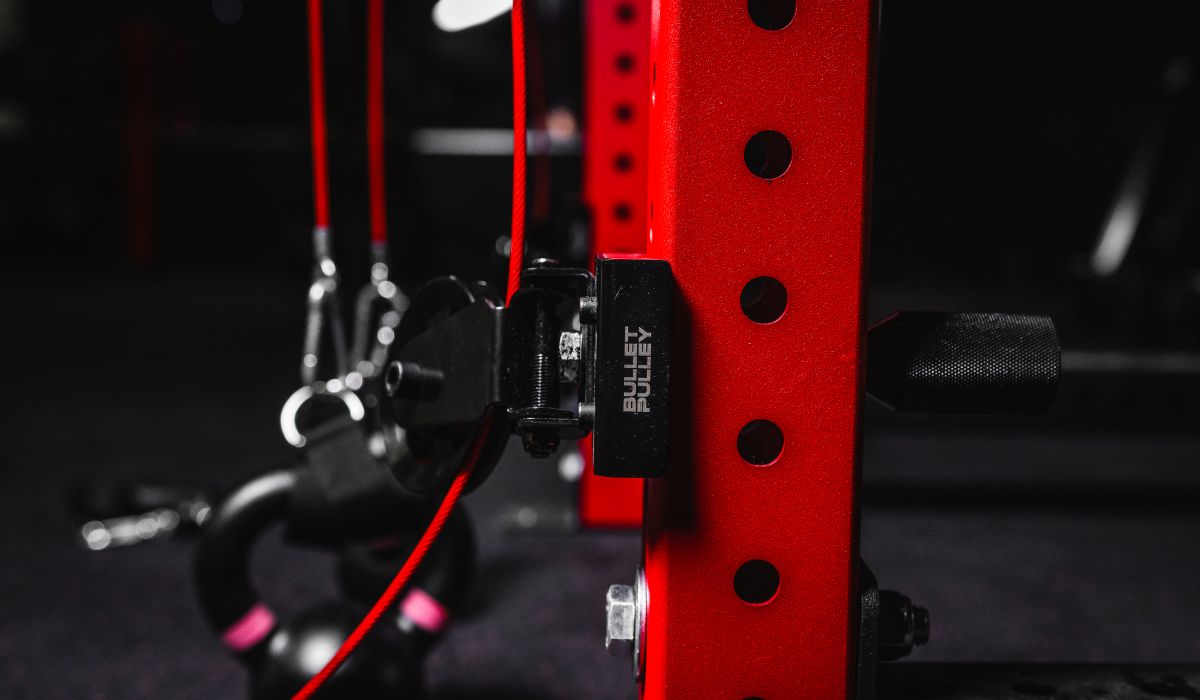
If you're building a pulley system for power rack use, prioritize flexibility over a perfect single measurement. A system like the Bullet Pulley is designed around this idea. It mounts to your existing rack and lets you switch between high and low anchor points, so the same hardware covers dozens of movements without you re-rigging anything. You reclaim your floor space and skip buying five separate machines.
Now let's get specific.
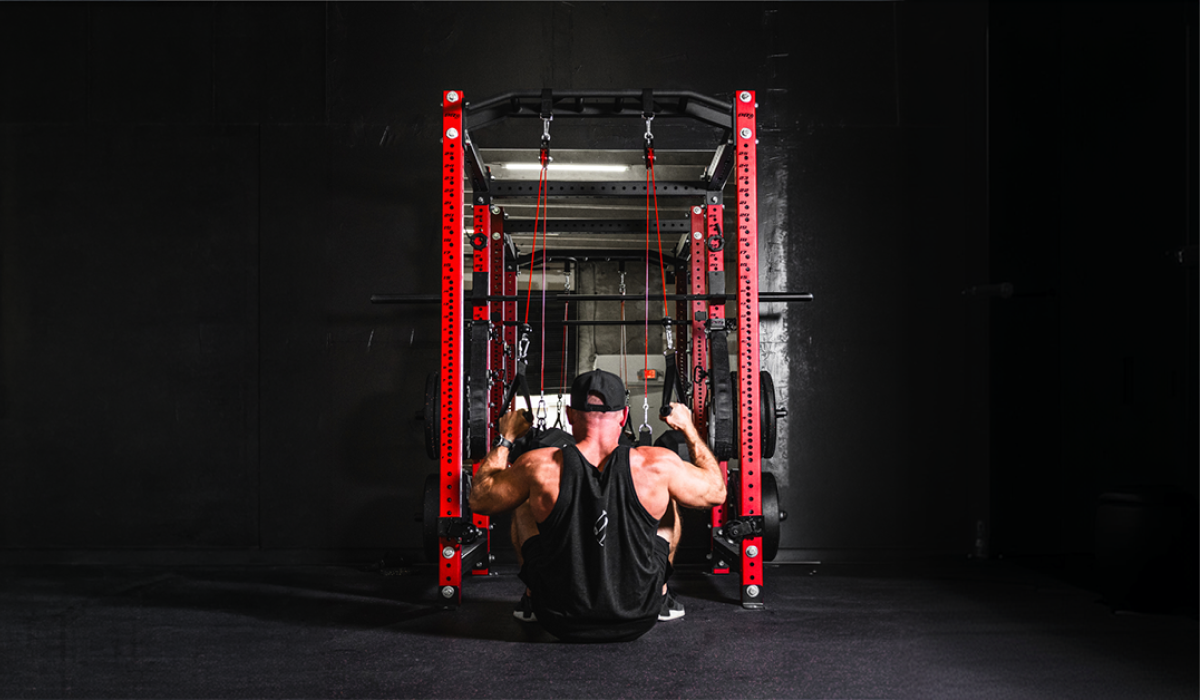
Cable Length for Lat Pulldowns
Lat pulldowns are the reason most people want a cable setup in the first place. And they're demanding on cable length because the movement happens overhead.
For a proper pulldown, your handle needs to sit high enough that you can reach up and get a full stretch at the top of the rep, then pull all the way down to your upper chest. That's a long range of motion. On a standard 90-inch rack, you're looking at needing enough working cable to let the bar travel from just below the top crossmember down to roughly chest height while seated.
If you're doing pulldowns seated on the floor or on a low bench, factor in that your starting position is already lower, which means the cable has to reach even further down. A rack mounted pulley system shines here because the anchor point is already up high where you need it. Just make sure your cable gives you that full overhead reach, otherwise you'll be cutting your lats short on every single set.
Cable Length for Tricep Pushdowns
Pushdowns are the polar opposite of pulldowns in terms of demand. They need surprisingly little cable.
You're standing, the handle starts around chest or shoulder height, and you press straight down to your thighs. That's a short, controlled range. Because you're not reaching overhead or down to the floor, the working length is modest.
The catch is that this same high anchor point does double duty. The cable you sized for your pulldowns will be more than enough for pushdowns, you'll just have extra length that the pulley takes up. This is a perfect example of why a longer, adjustable cable beats a short one. You can always manage excess cable, but you can never add length you don't have. A well-built home gym cable pulley system handles this gracefully, letting the same setup flow from a big overhead movement to a tight isolation exercise in seconds.
Cable Length for Low Rows
Low rows are usually the cable-hungriest movement in your whole routine, so this is the exercise to size your cable around.
Picture it: you're seated on the floor, legs out, pulling a handle from a low anchor point back toward your torso. The cable has to route all the way down to the bottom of the rack and then extend out far enough to reach you while your arms are fully extended forward. That's a lot of travel.
If your cable is sized only for pulldowns, low rows are where you'll discover the shortfall. You'll extend your arms, feel the cable go tight before you've reached full stretch, and lose the best part of the movement. When you're planning your cable pulley system for home gym, use the low row as your benchmark. If your cable comfortably handles a full seated row with room to spare, it'll handle everything else too.
Cable Length for Cable Curls and Face Pulls
Let's finish with the fun accessory work, because these two movements sit at opposite ends of the pulley.
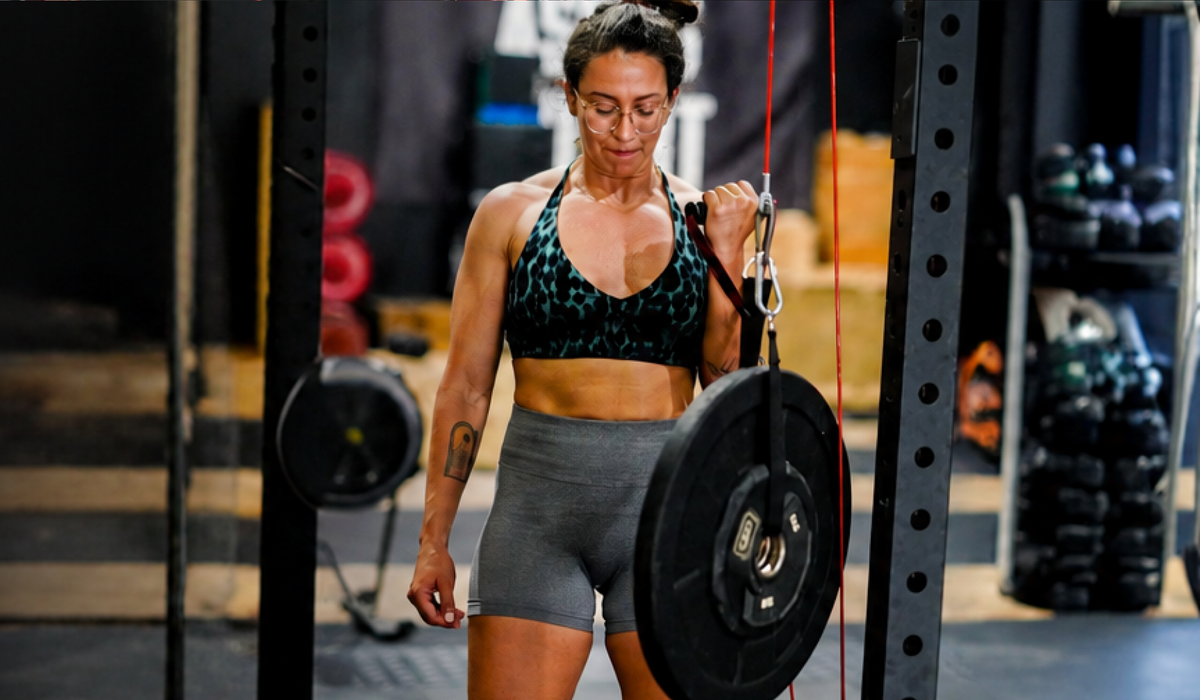
Cable curls run off a low anchor. You stand with the handle near the floor and curl up toward your shoulders. The range is short and sweet, so cable length is rarely an issue here. As long as your low pulley reaches the floor comfortably, you're set. It's a great finisher, and the constant tension from a cable hits your biceps in a way free weights just can't.
Face pulls, on the other hand, run off a high anchor, usually set around eye or forehead level. You pull the handle toward your face, flaring your elbows out wide. Because the anchor sits high and your pull is short and horizontal, you don't need much working cable, but you do need the anchor positioned at the right height. This is another spot where an adjustable rack mounted pulley system earns its keep, letting you drop the anchor from overhead pulldown height to face-pull height in moments.
Bringing It All Together
Here's the bottom line: size your cable for the most demanding exercise you plan to do, which for most people is the low row or a full crossover. Everything shorter, from pushdowns to curls to face pulls, is easily handled by managing the extra length through your pulley.
Don't overthink the perfect single number. Instead, invest in a setup that adjusts with you. Your rack height sets the baseline, your exercises set the demand, and a smart, modular pulley system bridges the gap so you're never stuck mid-rep wishing you had two more inches of cable.
Turn that empty rack into the home gym you actually wanted. Get the cable length right, and every pull, push, and curl will feel exactly the way it should.
Share:
How Much Protein Do You Actually Need When Training with Cable Machines?
Lat Pulldown Alternatives You Can Do on a Power Rack