

So you've decided to stop making excuses about the gym commute. Good for you. But now you're stuck between two very different paths to a stronger body, and everyone seems to have a strong opinion. One camp swears by the humble resistance band tucked in a drawer. The other won't stop talking about cables. So which one actually helps you build muscle faster, without ever leaving your garage?
Let's walk through both, fairly, so you can see exactly why one edges ahead for serious training.
What Resistance Bands Actually Do Well
Bands earn their popularity honestly. They're cheap, they roll up into a gym bag, and they travel better than anything else on this list. Working out in a hotel room, a tiny apartment, or squeezing in a quick session between errands? A band is genuinely hard to beat.
They're also easier on your joints in a specific way. Because resistance increases as the band stretches, some exercises feel lighter at the start and get progressively harder through the rep. That makes bands especially handy for beginners, warmups, and certain rehab exercises. If you're still learning how a movement should feel, or managing a joint issue, that gentler start is a real advantage, not a compromise.
Here's the catch, though. Because the resistance keeps climbing the further you stretch a band, the load isn't spread evenly across the whole movement; it's lighter at the start and heaviest right at the end. That's genuinely useful for certain lockout-focused moves, but it also means your muscles aren't working as hard through the full range of motion as they would with free weights or cables.
One more honest point: bands wear with time. A band you've had for a year or two won't pull quite the same as it did on day one. The rubber gradually loses some snap, and that change is easy to miss without a way to measure it.
Where Cable Machines Pull Ahead
A cable system handles resistance in a completely different way. Since the tension comes from a weight stack or a fixed pulley instead of stretched rubber, a cable gives you a more predictable feel throughout the movement, and you can even shift the pulley position to change exactly where the exercise feels hardest. That predictability matters, because a solid chunk of muscle growth happens in the middle of a rep, not just at the very top. To be clear, bands can absolutely build muscle too, as long as the resistance is genuinely challenging and you progress it over time. Cables just make it easier to dial in a precise load and actually track your progress week to week.
This is one of the clearest differences you'll notice in any real home gym equipment comparison. This isn't a marketing claim, it's simple mechanics, and it directly affects how much work your muscles are doing on every single rep.
There's also the variety factor. A cable setup lets you do cable flys, tricep pushdowns, lat pulldowns, face pulls, woodchoppers, and single-arm presses essentially the same moves you'd find on a commercial gym machine. Bands can mimic a few of these, but the angle and tension shift as you move, so the resistance can feel a bit less predictable through certain exercises.
But Isn't a Cable Machine Bulky?
Fair question and it used to be a fair point in favor of bands. Old-school cable towers are huge, pricey, and swallow up half a garage. That trade-off made sense for a long time. It's just not really true anymore.
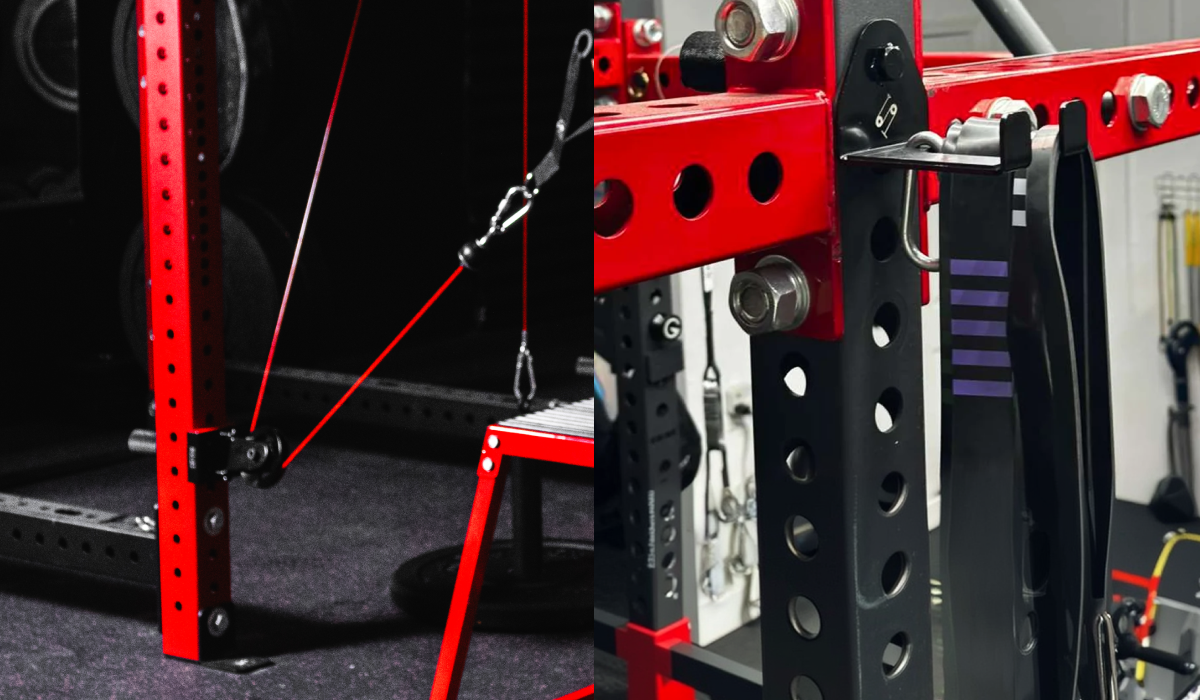
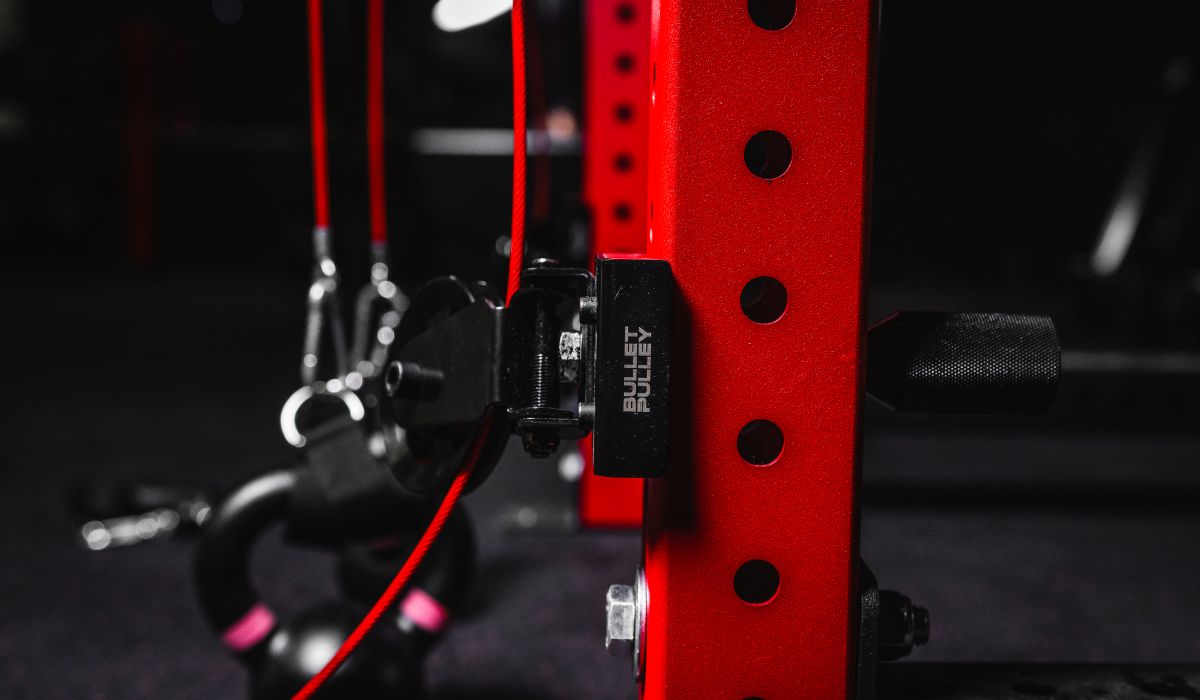
Compact cable systems now attach directly onto a power rack cable attachment point, so if you skip the separate freestanding tower altogether you're simply adding pulleys to a rack you probably already own. That one change completely flips the space equation. You get the full range of a cable machine without giving up an inch of floor space, which is exactly what you want if you're browsing home gym setup ideas for a garage or spare room that isn't the size of a warehouse.
The Muscle-Building Comparison
If we're being direct about which tool actually builds muscle faster, it comes down to something called progressive overload. Basically, your muscles grow when you keep challenging them with a little more resistance or tension over time. Cables make this really easy to do with precision: you adjust the weight stack in small, exact increments, and you always know exactly what you lifted last week versus this week. With bands, progress is harder to pin down; you're mostly going off band color or how stretched something feels, not a real number.
Cables also tend to keep useful resistance on the muscle through more of the rep, depending on the exercise and where you set the pulley, which lines up with what most muscle-growth research points to as a real driver of results. Bands get harder the further they stretch, which just makes the resistance feel very different from a cable or a weight stack even though that same quality is exactly what makes them gentler for rehab and mobility work.
None of this makes bands a bad tool. It just makes them a different one. They're genuinely great for warmups, mobility, rehab, or days when you truly can't bring equipment along. But if your main goal is building visible, trackable muscle at home over months of consistent training, cables give you a more direct, easier-to-measure path there.
What to Actually Look For in a Cable System
Not every cable setup is built the same way, so if you're shopping around, here's what actually separates a good one from a waste of money.
Cable machine benefits only really show up if the machine moves smoothly under load. Cheap pulleys made from soft metal tend to grind, stick, and wear out fast, which throws off your tension and just feels bad mid-set. Look for smooth-running pulleys made from durable materials, with secure mounting hardware and minimal friction.
Adjustability matters too. A single fixed pulley height limits you to a handful of moves. A system with multiple height and angle options opens up chest presses, rows, curls, pulldowns, leg extensions, and core work all from the same anchor points.
And don't overlook the footprint. The whole point of training at home is convenience, so if your best home gym cable machine pick still means rearranging furniture every session, it's kind of defeating the purpose. A system that clips onto your existing rack, folds away, or stores in a small bag keeps that convenience intact.
Building It Out Without Overcomplicating It
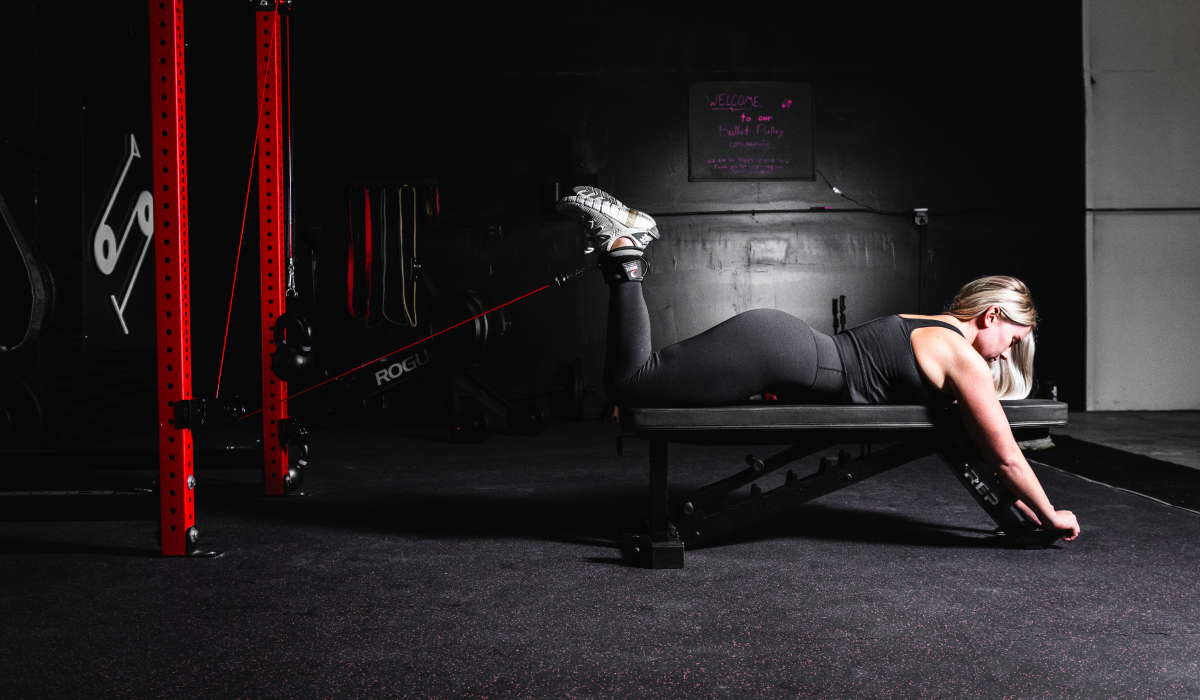
You don't need to buy everything at once. Start with the anchor point of your rack, a door frame mount, or a wall-mounted bracket then add pulleys and a handle attachment or two. From there, layer in a bar attachment for pushdowns, an ankle strap for leg work, and a rope for face pulls and tricep extensions whenever you're ready to expand.
This step-by-step approach is a genuinely smart way to plan out a small training space. Instead of committing to one bulky machine that only does three exercises, you're building a flexible system that grows right alongside you one piece at a time, learned properly, at your own pace.
What About Cost Over Time?
Bands win on sticker price every time a set usually costs less than a nice dinner out. But sticker price and real cost aren't quite the same thing. Bands can eventually wear, especially with frequent stretching or improper storage, so it's worth inspecting them regularly, and replacing a worn set every so often adds up quietly over time.
A cable system built from rust-resistant, precision-machined parts is designed to handle years of repeated heavy loading before it ever needs replacing. That's a genuinely higher upfront cost, worth saying plainly rather than glossing over but spread across years of use, plus the sheer exercise range you get in return, the cost-per-workout often ends up favoring the cable setup, especially if you're training seriously and consistently rather than every once in a while.
The Bottom Line
Resistance bands are a legitimately good tool, cheap, portable, and joint-friendly in a way that makes them genuinely useful for warmups, rehab, and anyone just getting started. Their limitation isn't that they're bad; it's that a changing tension curve and harder-to-track progress make them a weaker fit once your main goal shifts toward serious, measurable muscle growth.
That's the gap cable systems close. Predictable resistance through more of the rep, precise and trackable increases in load, and enough exercise variety to train your entire body from one compact setup all without needing a dedicated room, especially now that rack-mounted options exist. If you're building a serious home gym rather than just staying loosely active, that combination is what makes cables the stronger long-term choice.
Keep the bands around for warmups and travel days. But if your priority is measurable progression and a versatile long-term home setup, cables are the stronger choice.
Share:
Cable Shoulder Workout: Exercises to Build Bigger Delts at Home
Best Cable Leg Exercises for Quads, Hamstrings & Glutes