

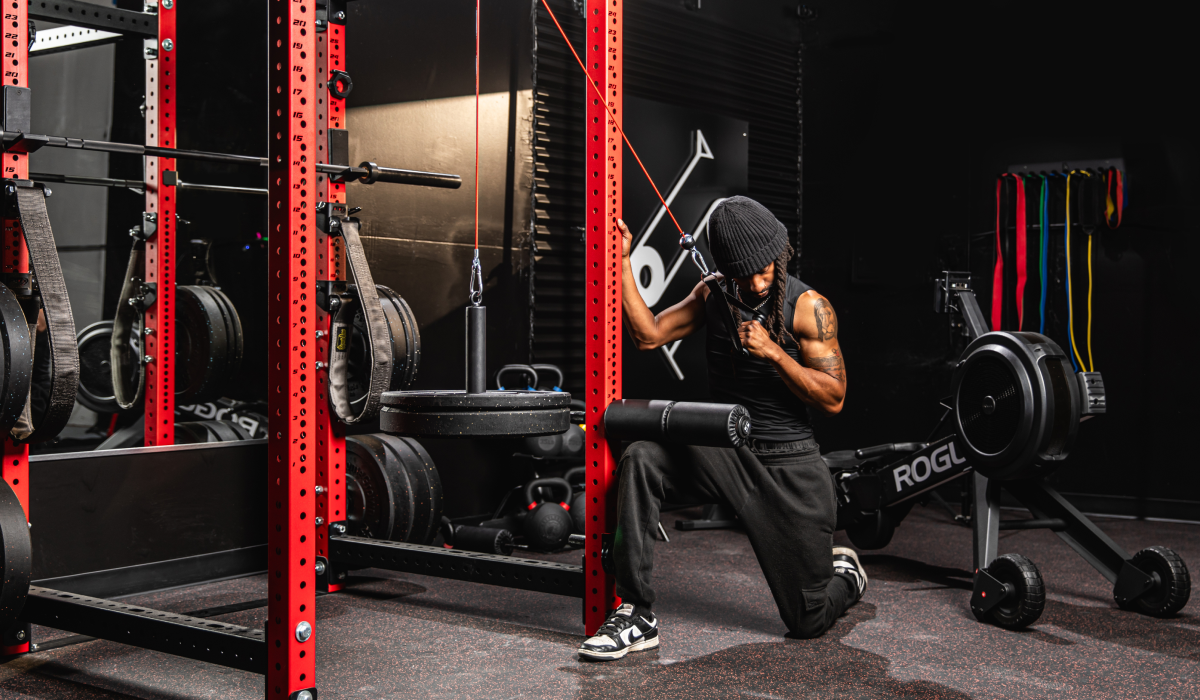
Let's be honest, shoulders make or break a physique. You can have a decent chest and solid arms, but if your delts are flat, your whole upper body looks unfinished. That "capped shoulder" look everyone's chasing? It doesn't come from luck. It comes from hitting the right angles, consistently, with the right kind of resistance.
And here's the thing nobody tells you: dumbbells and barbells are great, but they only pull in one direction straight down, thanks to gravity. Your shoulder muscles, though, work in every direction imaginable. That's exactly why a cable shoulder workout is such a useful addition to your training. Cables provide a different resistance profile from free weights, allowing you to maintain useful resistance through more of certain movements depending on the pulley position.
If you've got a garage, a spare room, or even just a corner with a rack, you don't need a commercial gym membership to build serious delts. Grab a cup of coffee, get comfortable, and let's dig into exactly how to train your shoulders without ever stepping foot in a gym.
Why Cables Are Basically Cheat Codes for Shoulders
Think about the last time you did a dumbbell lateral raise. The hardest part is usually at the top, and the moment the weight comes back down, your delts basically get a mini vacation. That's the problem with gravity-based training: tension isn't constant.
Cables fix this. Because the resistance comes from a pulley system rather than straight-down weight, your muscles stay under load throughout the entire movement stretch position, mid-range, and peak contraction. This is a big reason cable pulley shoulder exercises are favored by physique athletes and coaches who care about muscle shape, not just raw strength numbers.
There's also the joint-friendliness factor. You can adjust the pulley height and angle of resistance to find a setup that feels comfortable for your movement pattern.
Setting Up Your Space
You don't need a warehouse. A cable pulley station mounted to a power rack, wall, or door frame is enough to unlock chest, back, arm, and yes full shoulder training, all from one compact setup. This is exactly why so many people training in garages and spare bedrooms lean on a pulley system instead of hauling in bulky machines. If you're serious about home gym shoulder exercises, a proper dual-pulley setup with adjustable height is honestly one of the best pieces of equipment you can add to a small space. It folds into your existing rack, takes up almost no floor real estate, and gives you gym-level exercise variety.
The Anatomy Quick Recap (Don't Skip This)
Your shoulder, the deltoid isn't one muscle, it's three:
-
Front delt (anterior): gets hit by pretty much every pressing movement you already do
-
Side delt (lateral): the one responsible for that wide, capped look
-
Rear delt (posterior): often neglected, but crucial for posture and that 3D shoulder look from behind
Most people over-train front delts (thanks to bench pressing) and completely ignore the rear delts. A smart cable routine balances all three, and cables make hitting each head individually much easier than free weights do.
The Exercises: Your Complete Cable Delt Routine
1. Cable Lateral Raise (Side Delt)
Stand sideways next to the low pulley, grab the handle with the far hand, and raise your arm out to the side until it's roughly shoulder height. This is one of the best exercises for building shoulder width, and the cable can provide useful resistance through more of the movement depending on the pulley position.
Sets/Reps: 3-4 sets of 12-15 reps per side
2. Cable Front Raise (Front Delt)
Attach a straight bar or single handle to the low pulley, stand facing away, and raise the handle in front of you to shoulder height. Keep a slight bend in the elbow and resist the urge to swing.
Sets/Reps: 3 sets of 12 reps
3. Cable Face Pull (Rear Delt + Upper Back)
Set the pulley to roughly eye level, attach a rope, and pull it toward your face while flaring your elbows out wide. This is a useful accessory for training the rear delts and upper back, especially if your routine is heavy on pressing movements.
Sets/Reps: 3-4 sets of 15 reps
4. Cable Overhead Press
Kneel or stand between two low pulleys (or use a single pulley set low), grab the handles, and press directly overhead. Because the resistance angle changes throughout the lift, your shoulders stay engaged from start to finish rather than getting a break at lockout like they would with a barbell.
Sets/Reps: 3 sets of 8-10 reps
5. Cross-Body Cable Raise
Set the pulley low, grab the handle with the opposite hand, and raise it diagonally across your body to shoulder height. This variation hammers the side delt from a slightly different angle, filling in gaps that standard lateral raises miss.
Sets/Reps: 3 sets of 12 reps per side
6. Reverse Cable Fly
Set two pulleys at chest height, cross the cables, and pull them apart and back in a wide arc, squeezing your rear delts hard at the peak. If you're chasing that "3D shoulder" look from behind, this move deserves a permanent spot in your rotation.
Sets/Reps: 3 sets of 15 reps
Sample Weekly Routine
Here's how to string these together into an actual training session at home no membership, no waiting for equipment:
-
Cable Overhead Press — 3 x 6-10
-
Cable Lateral Raise — 3-4 x 10-15
-
Reverse Cable Fly — 3 x 12-15
-
Cable Face Pull — 2-3 x 12-15
-
Cross-Body Cable Raise — 2-3 x 12-15
Do this once or twice a week, resting 45-60 seconds between sets. If your delts are already sore from pressing movements earlier in the week, drop the overhead press and focus on the isolation work instead. This kind of session shows that a shoulder workout no gym can still be effective, no crowded gym floor required.
Tips to Actually See Results
Slow down the negative. Most people rush the lowering phase of every rep. Cables reward control take two to three seconds on the way down and you'll feel the difference by set two.
Don't chase heavy weight on isolation moves. Lateral raises and face pulls are about feel, not ego lifting. If you're swinging the cable or using momentum, drop the weight and dial in the form.
Train rear delts as much as front delts. This is the single biggest mistake people make when they try to build shoulders at home using only pressing movements. Balance the pull-to-push ratio and your shoulders will look proportionate, not lopsided.
Progressive overload still applies. Add a rep, add a set, or add a small amount of resistance every couple of weeks. Cables just change how the tension feels they don't replace the basic rules of muscle growth.
Common Mistakes to Avoid
Even with the best equipment, a few habits can quietly stall your progress. Watch out for these:
Standing too close to the pulley. This shortens your range of motion and cuts the stretch that actually stimulates growth. Give yourself enough distance to feel a full stretch at the start of every rep.
Shrugging during lateral raises. If your traps are doing the work instead of your delts, drop the weight. Keep your shoulders down and away from your ears throughout the set.
Skipping the warm-up. Shoulders are one of the most mobile and most injury-prone joints in the body. Two or three light sets on the cable before you load up properly will save you a lot of frustration down the line.
Only training in one plane of motion. Pressing straight up and raising straight out is a good start, but real shoulder development comes from working diagonal and rotational angles too, which is exactly what cross-body raises and face pulls are built for.
Fuel the Gains: A Quick Word on Recovery
Training hard is only half the equation. Muscle growth depends on training, nutrition, sleep, and recovery working together. A protein-rich meal post-workout thinks grilled chicken with quinoa, a Greek yogurt parfait, or even a simple paneer stir-fry helps repair the micro-tears from a tough session. Pair that with 7-8 hours of sleep, and you'll notice your shoulders responding to training far faster than if you're just grinding through reps with no recovery plan.
Wrapping It Up
You genuinely don't need a commercial gym to build round, capped, three-dimensional shoulders. A cable-based routine hits every angle your delts need front, side, and rear with a resistance profile that can complement what you get from dumbbells and barbells. Set up a pulley station in your garage or spare room, run through these movements consistently, and give your body the recovery it needs, and over time you'll notice your shoulders starting to fill out your t-shirts.
Home training isn't the compromise it used to be. With the right setup and the right exercises, your living room can absolutely out-perform a crowded gym floor.
Share:
Lat Pulldown Alternatives You Can Do on a Power Rack
Cable Pulley vs. Resistance Bands: Which Builds Muscle Faster at Home?