
Let's be honest. Nobody finishes a great workout and flexes their calves in the mirror. It's always the arms.
If you've followed our chest, shoulder, and back guides, you already know how much a pulley setup can do in a small space. Now it's time for the part everyone secretly waits for: arms, built right in your garage, basement, or spare bedroom.
Why Cables Earn a Spot in Your Arm Training
With dumbbells, gravity always pulls straight down, so how hard a curl feels depends on your arm's position. Near the top, your forearm is almost vertical and the load gets noticeably easier.
A cable pulls along its own line instead, which often keeps more tension on the muscle in those spots. The exact feel depends on where you set the pulley and where you stand, and that adjustability is a big part of the appeal.
You can switch between high, low, and mid anchors in seconds and swap between a rope, bar, or single handle. Some lifters also find that adjusting the angle or grip makes arm work more comfortable on their elbows and wrists, though this varies from person to person.
A Quick Anatomy Lesson
Your triceps are the larger of the two main upper-arm muscles, so curling nonstop won't give you bigger arms on its own.
Your biceps have two heads, with the brachialis underneath adding thickness. Your triceps have three heads: long, lateral, and medial. The long head crosses the shoulder joint, which is why overhead movements are a popular way to train it.
Setting Up Your Station
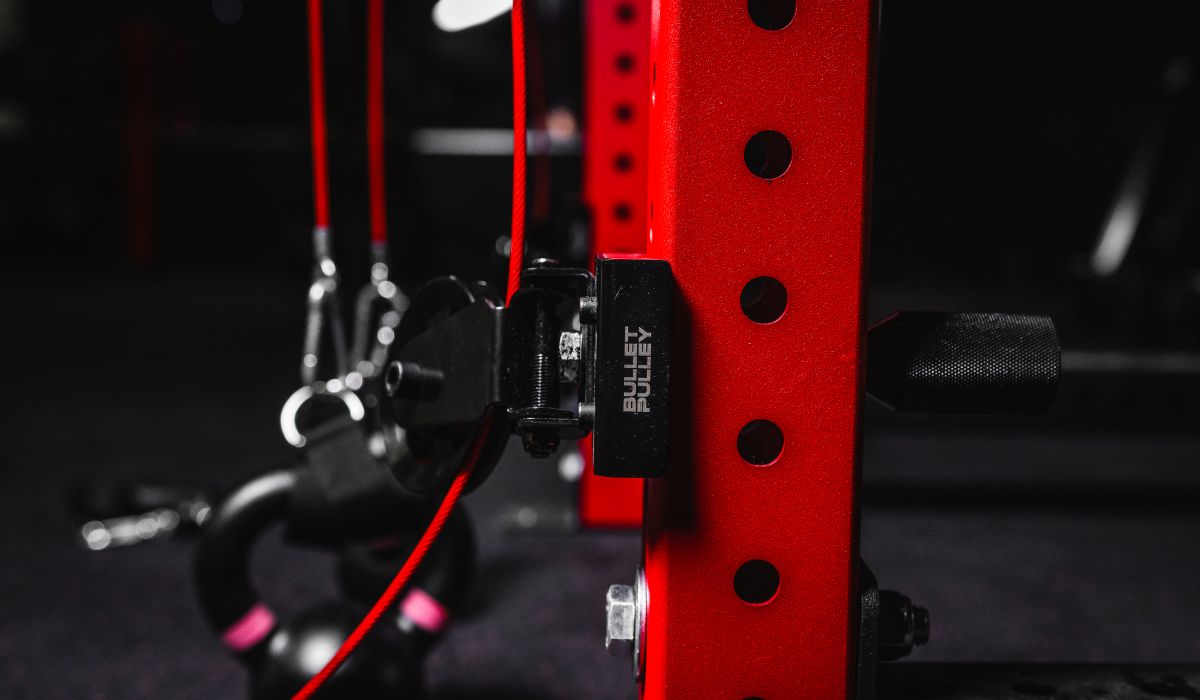
You don't need a commercial cable tower. A rack-mounted pulley with a loading pin, a rope, a straight or EZ bar, and a couple of single handles covers this entire routine.
Bullet Pulley, for example, works with most power racks that have 2–3-inch uprights, and it can also be mounted to a ceiling joist if you don't own a rack. Load plates on the pin, set the pulley height, and you're ready.
The Biceps Lineup
1. Standing Cable Curl
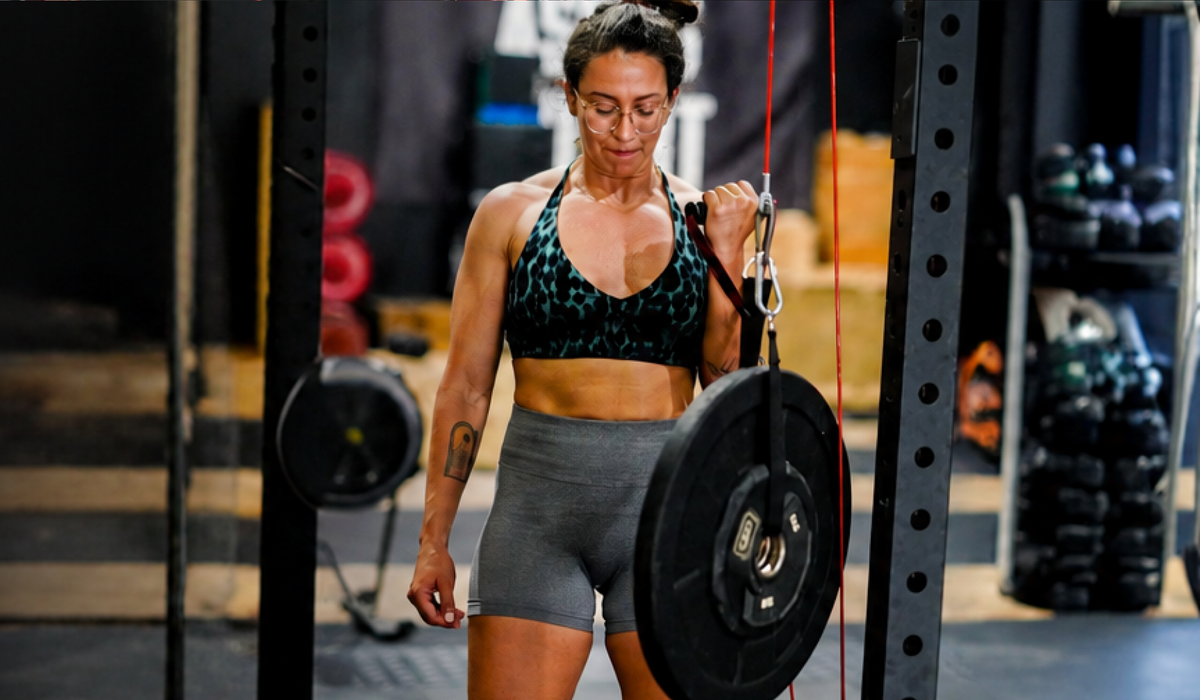
This is the backbone of any cable bicep workout. Set the pulley low, grab a straight or EZ bar, keep your elbows at your sides, and curl. Squeeze briefly at the top, then lower under control.
Sets/Reps: 3 x 10–12
Pro tip: If your hips start swinging, the weight is too heavy.
2. Cable Preacher Curl
Set a preacher pad or incline bench in front of the low pulley and rest your upper arms on it. This takes your shoulders out of the movement.
Many lifters find bicep curls with pulley resistance on a preacher pad give them one of the best pumps of the session, since the top of the rep never becomes a resting point.
Sets/Reps: 3 x 10–12
3. Rope Hammer Curl
Use the rope, keep your palms facing each other, and curl. The neutral grip brings in the brachialis and forearms for extra arm thickness.
Sets/Reps: 3 x 12
4. Bayesian Curl
Face away from a low pulley, hold a single handle, and step forward so your arm sits slightly behind your body. Then curl.
This puts the biceps in a more lengthened position. A 2025 study directly comparing Bayesian and preacher cable curls found both produced similar biceps growth and strength gains over 10 weeks, with no meaningful difference between the two positions. That makes the Bayesian curl a great option for variety rather than a must-do upgrade. The study was small, so neither curl should be considered universally better.
Sets/Reps: 3 x 10 per arm
The Triceps Lineup
5. Straight Bar Pushdown
Set the pulley high, grab a straight bar overhand, tuck your elbows, and push down to full lockout.
The tricep pushdown at home is a garage gym favorite for good reason: it's easy to learn, easy to load, and a solid all-round triceps builder.
Sets/Reps: 3 x 10–12
6. Rope Pushdown with a Split
Swap to the rope and pull the ends slightly apart at the bottom of each rep for a stronger squeeze.
Sets/Reps: 3 x 12–15
7. Overhead Rope Extension
Face away from the pulley, hold the rope behind your head with elbows pointing forward, stagger your stance, and extend your arms.
Because the triceps' long head crosses the shoulder joint, raising your arms overhead stretches it further than a pushdown can, and a cable rope tricep extension takes advantage of that. In a 12-week study (Maeo et al., 2023), 21 adults trained one arm overhead and the other with the upper arm at their side. The overhead arm's total triceps volume grew 19.9% versus 13.9%, despite using lighter loads. It's one small study, so keep pushdowns in the mix too.
Sets/Reps: 3 x 10–12
Pro tip: Keep your elbows from flaring out.
8. Single-Arm Reverse Grip Pushdown
Use a single handle, palm facing up, and push down one arm at a time. Training each side separately helps even out imbalances.
Sets/Reps: 2 x 12 per arm
Your Weekly Arm Plan
Train arms twice a week on non-consecutive days, such as Monday and Thursday. If your arms are still sore or your elbows feel cranky, add an extra rest day.
Day A – Heavy: Standing Cable Curl (3 x 8–10), Straight Bar Pushdown (3 x 8–10), Cable Preacher Curl (3 x 10), Overhead Rope Extension (3 x 10)
Day B – Pump: Bayesian Curl (3 x 12 per arm), Rope Pushdown with a Split (3 x 15), Rope Hammer Curl (3 x 12), Single-Arm Reverse Grip Pushdown (2 x 15 per arm)
Short on time? Pair a biceps move with a triceps move and alternate with minimal rest.
How Hard Should Each Set Be?
For most sets, finish with one to three good reps left in the tank. The form should stay clean, but the last reps should feel tough. Beginners can stay a little further from failure while learning, and a simple log of weights and reps will tell you when it's time to move up.
Mistakes That Hold Arms Back
-
Going too heavy, too soon. Swinging shifts work away from the muscle you're training.
-
Rushing the way down. Controlled lowering keeps tension where you want it.
-
Skipping triceps. They're the bigger muscles, so give them equal attention.
-
Never progressing. Add a rep, a plate, or slow the tempo every week or two.
-
Shortchanging recovery. Sleep and enough protein make a real difference.
One Setup, Endless Options
The best part about home gym arm exercises on a pulley system is that the same station handles your chest, back, shoulders, legs, and core too. No separate machines, no cluttered floor, no membership.
Once these eight moves feel natural, you'll have a toolbox of cable tricep exercises and curls that can keep you progressing for a long time just by adjusting angles, grips, and tempo.
The Final Rep
Bigger arms don't come from one magic exercise. They come from smart exercise choices, consistent effort, and steady progression. Cables give you a flexible, space-friendly way to do all of that right in your garage.
So set your pulley, load the pin, and start curling. Your next mirror check will thank you.
Share:
Cable Pulley Ab & Core Workout: Best Exercises at Home